AI Glasses Are Finally a Real Product. Here's What to Know Before You Buy.
For most of the past decade, camera-equipped smart glasses existed mostly as a concept in search of a use case. Early attempts never stuck. The hardware was conspicuous, the battery lasted hours rather than a day, and the software did too little to justify wearing something that drew stares everywhere you went.
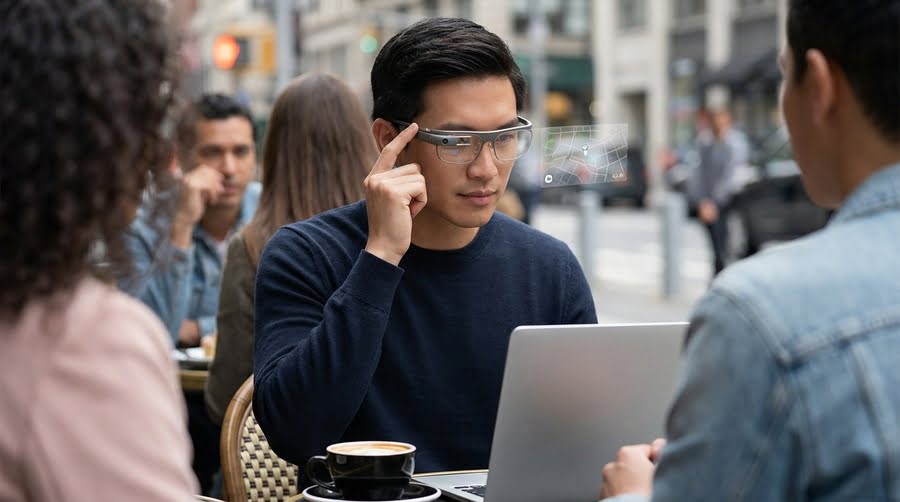
That picture has changed considerably. The current generation of AI glasses now reaching major eyewear retailers are a different product from what came before, and understanding what they actually do makes it easier to decide whether they belong in your everyday carry.
What the Category Actually Covers
The phrase "AI glasses" gets applied to a wider range of products than most people expect. At one end, you have frames built around audio: open-ear speakers positioned near the temples that direct sound toward the ears without sealing them off from the world. These are sometimes called audio glasses or glasses with speakers, and the core appeal is doing what earbuds do while keeping you aware of your surroundings. You can take calls, listen to directions, play music, and hear a car horn or a question from a coworker without pulling a single piece of hardware out of your ear.
At the other end, you have glasses with an integrated camera. Depending on the model, that camera sits at the bridge or corner of the frame and captures photos and short video clips triggered by a physical button, a gesture, or a voice command. The footage is not cinematic, but it handles the things phone cameras are awkward for: spontaneous moments, hands-free recording while you are doing something physical, quick documentation without breaking your focus.
The video recording glasses use case has proven more varied than manufacturers initially anticipated. Cyclists use them for ride documentation and navigation cues. Parents use them to stay present at events rather than watching through a phone screen. Professionals use them for field notes and visual documentation during site visits or inspections. The common thread is that the camera becomes useful precisely because it is always there and requires almost no effort to activate, not because the output competes with dedicated recording hardware.
What ties both categories together is the AI layer. The better models today connect to an assistant that can respond to what the camera sees, answer questions, surface contextual information, or translate text in the environment around you. That changes the glasses from a recording device into something closer to a wearable research tool.
Why the Timing Is Different Now
The hardware cycles that killed earlier smart glasses largely came down to the same cluster of problems: too heavy, too power-hungry, too obviously a gadget wearing a frame rather than a frame that happened to contain technology. Consumers could forgive one of those problems. Three at once was too much.
Miniaturization of wireless components, improvements in directional speaker design, and better thermal management have addressed most of those issues. The frames people are buying today sit at normal eyewear weights. Battery life has extended to a full day of light use, and charging cases have made topping up as automatic as it is for wireless earbuds. According to research from IEEE Spectrum, advances in bone conduction and near-ear speaker arrays have made open-ear audio viable without the fidelity tradeoffs that plagued early designs.
The other shift is aesthetic. The current generation of AI glasses is designed by eyewear companies or in genuine partnership with them. The result is that the products look like sunglasses or optical frames, not like prototype hardware wearing a costume. That distinction mattered more to mainstream adoption than the spec sheet.
Privacy Is Worth Thinking Through
Camera glasses raise a question that audio glasses do not, and it is worth being honest about it. Recording video in public with a device that does not look like a camera is a different social situation from pulling out a phone. Most current models include an indicator light that signals when the camera is active, and several platforms have invested in detection tools that alert nearby devices, following consumer privacy guidance on wearable recording technology.
The practical answer for most buyers is that the camera gets used primarily in personal contexts: outdoors, during exercise, at events where photography is expected. The audio features, on the other hand, work everywhere and tend to become the primary reason people keep reaching for the glasses each morning.
What to Pay Attention to When Comparing Models
Battery life varies significantly across the category, and it depends heavily on which features you use most. Continuous audio playback draws more power than standby, and active camera use draws more than either. Real-world estimates from manufacturers are usually optimistic; accounting for mixed use is a reasonable adjustment.
Fit matters more with glasses than with most wearables because the frame has to stay comfortable across a full day. Prescription lens compatibility is another variable to check early. Several models now support lens inserts or integrate directly with optical prescriptions, which expands the category considerably for people who already wear glasses.
Ecosystem compatibility is the sleeper issue. Some frames run proprietary assistants while others connect to platforms you may already use. That affects not just which voice commands work but how useful the AI features are in practice.
Sound quality in open-ear designs is a legitimate variable rather than a given. The physics of near-ear audio without a seal means that bass response is naturally reduced compared to in-ear headphones, and performance drops in noisy environments. That trade-off suits some listening habits better than others. If call clarity is the primary use case, most current models handle it well. If you plan to use the audio for focused music listening in loud environments, testing before committing is worth the effort.
Water and dust resistance is another spec to check if your daily routine involves outdoor activity or exercise. Most AI glasses in the current market carry at least a basic splash resistance rating, but the range varies, and the ingress protection ratings between models are not always easy to compare at a glance. This matters more for glasses than for other wearables because the frames go everywhere with you and replacing them after damage to a component is typically more involved than swapping out earbuds.
FintechZoom's tech coverage has more on how the broader wearable hardware space is developing, and for readers tracking the business side of this category, the investor analysis of the AI eyewear boom is worth reading alongside this.
An Honest Take on Where Things Stand
AI glasses are a useful product for a specific kind of person. If you already live in wireless earbuds most of the day, a well-made pair of audio glasses removes a friction point and does not require you to give anything up in return. If you tend to miss moments because reaching for your phone interrupts them, the camera case is genuinely compelling. If you are interested in hands-free access to an AI assistant, the current models make that interaction meaningfully more natural than talking to a phone in your pocket.
They are not for everyone. The camera resolution on most models will not satisfy anyone who cares about image quality for its own sake. The AI features are more useful in some routines than others. And the category is still moving fast enough that hardware bought today will look different from what is available a year from now.
What has changed is that the reasons to dismiss smart glasses entirely have mostly disappeared. The products work. They are comfortable. They do not make you look like you are wearing a prototype. For a category that spent a decade as a cautionary tale about hardware hubris, that is a meaningful shift.